





Parent Education: Language - English & Chinese (6-12)
Montessori Language Arts: The Story Of Communication In Signs And Introduction To Writing
The Fourth Great Story, the Story of Communication in Signs, helps to answer the question of why human beings would want to start communicating in signs in the first place.
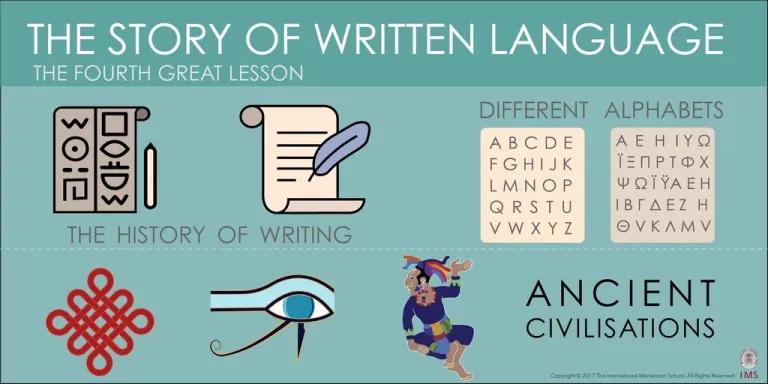
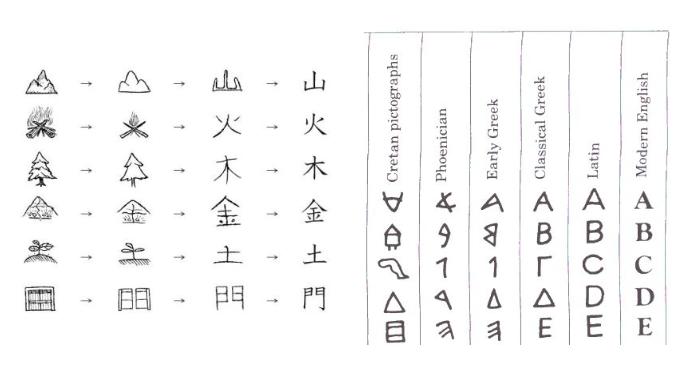
It tells the story of the development Chinese characters from pictograms and the Latin alphabet from the Egyptians, to the Phoenicians, to the Greeks, to the Romans, to us. By doing so, writing is revealed as more than a simple tool for expressing ideas. Writing is part of the shared patrimony of humanity.
The children realize that, when they write, they are taking part in an ancient cultural activity which they have received as a gift from countless people who have come before them. This realization leads to a profound gratitude to those anonymous people thousands of years ago who passed down the privilege of writing to us.
Language serves as a foundation for much of what the child learns in all other areas.
Reading, writing and oral expression suddenly become critically important as the child begins to try to explore areas of interest – in both English and Putonghua. Teachers support these motivated children with new, challenging lessons in grammar, punctuation, different writing styles, interpreting drama, and integrating all of these skills into ever better written work and presentations, as they explore all disciplines.
Writing
Writing is an ever-present activity in the Montessori Elementary classroom, and it is one that the children love taking part in. Although the children are first exposed to the alphabet through the sandpaper letters in Casa Dei Bambini, through the Fourth Great Story the children realize that, by engaging in writing, they become part of the grand story that connects human beings past, present, and future.
In the Elementary years, the focus is on writing a lot, and Spelling is secondary. In order to support good writing, we begin a progression of weekly spelling tests, with each child receiving a standard weekly list of words appropriate for their age and year level.
In addition, we encourage the children to choose a number of words from each child’s own writing to add to the list each week to conquer these personally relevant and challenging words.
With the child’s own self-reflection and desire to perfect their own writing, spelling becomes better and better over the years. By Upper Elementary, most children are spelling well, and rarely forget their punctuation in their final drafts.
Reading
Students in the Elementary Montessori classroom take great pleasure in reading. Learning in context brings meaning and purpose to their explorations, which encourages children to work to perfect their reading so they can read widely and independently, to write creatively, to interpret drama, and to read widely as they explore the answers to these important questions.
Reading, writing, and oral expression are fundamentally important to the success of the child’s learning, and now the child is motivated to perfect and hone their own language skills – in both English and Putonghua. Teachers in the Elementary Years classroom help the child build on their own earlier foundational experiences with sound, phonics, and writing, plus their sensorial experiences with grammar, which have developed an almost instinctive sense of language. Children who have completed the IMS Montessori Casa dei Bambini Programme will have built this natural language foundation in both English and Chinese.
Grammar
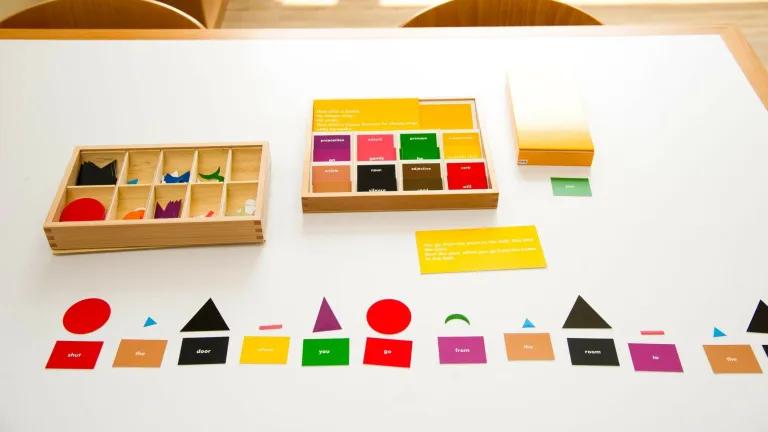
There is a high level of emphasis on grammar in the Montessori curriculum, but not as a prescriptive list of arbitrary rules passed down from an ivory tower. Instead, children discover the natural rules of English by interacting with the language materials in the classroom. This process of discovery makes the exploration of grammar very enjoyable for the children and the Grammar Boxes are often the most popular materials in the class!
Sentence analysis helps children evaluate and understand the roles words play within a sentence, which is at the basis of grammar. We start by looking at simple sentences with a predicate and a subject: the subject is the one who acts and the predicate is the action.
Chinese
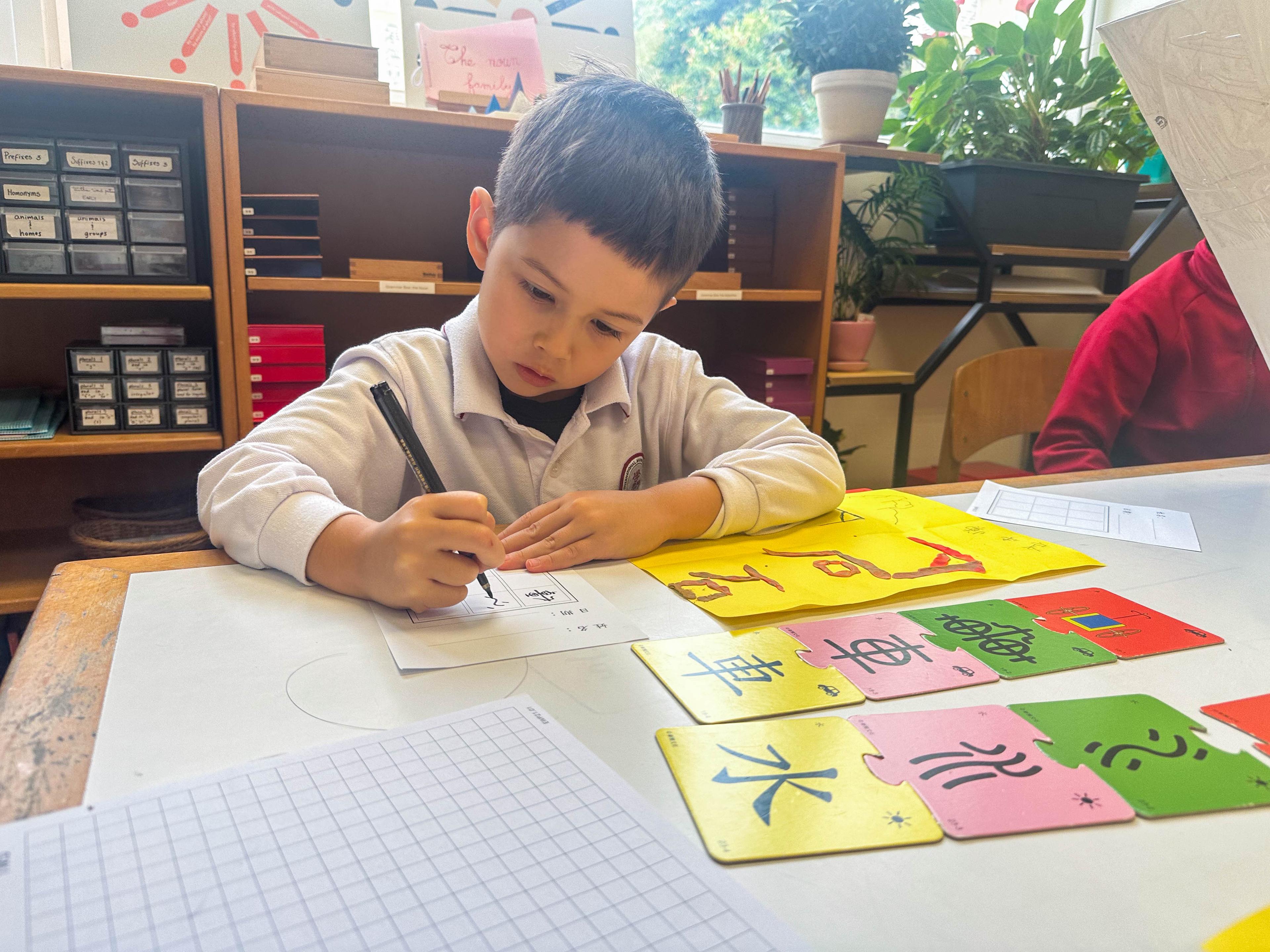
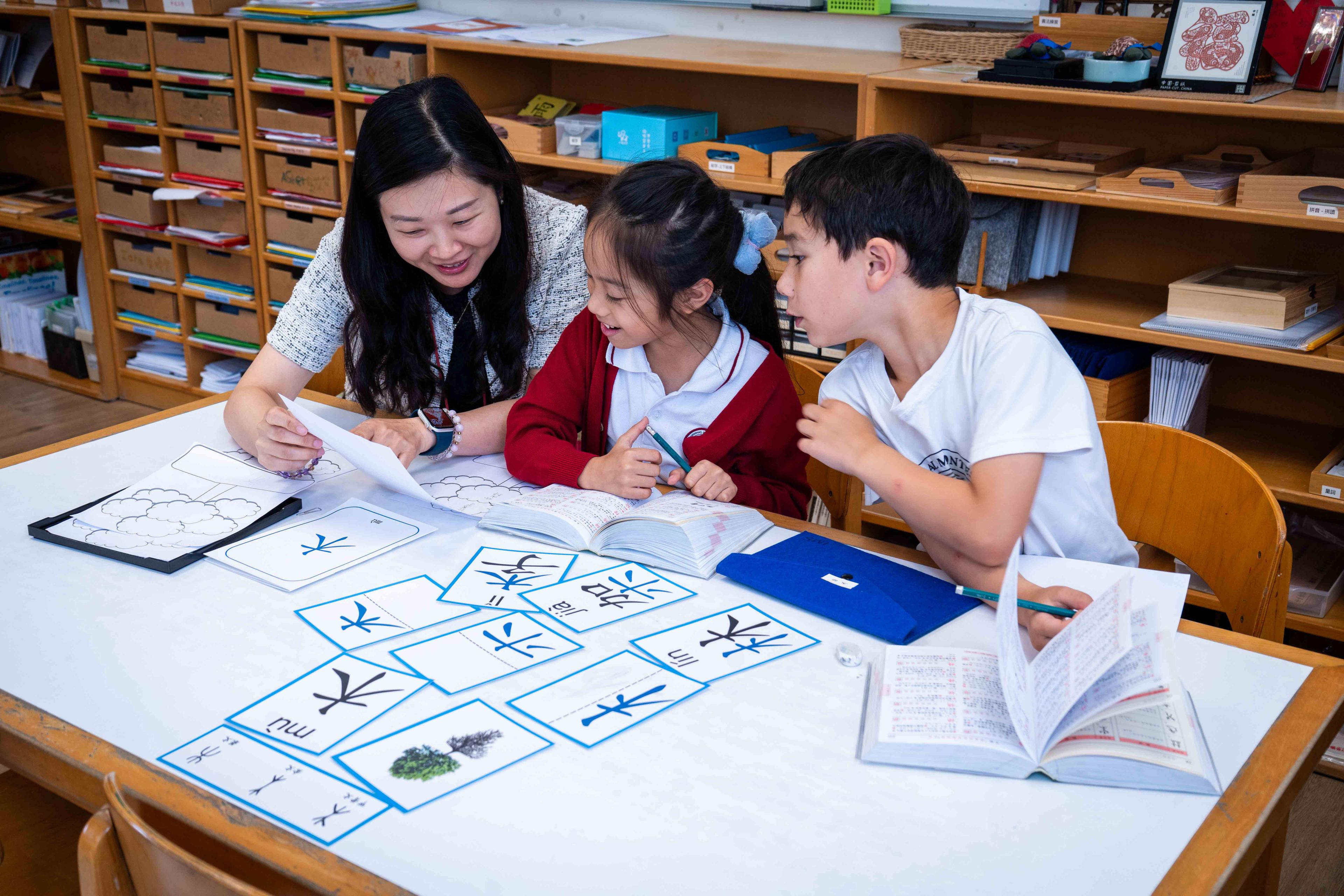
During the cycle time in the classroom, the English-speaking teacher provides small-group lessons and support for work in the class and the Chinese-speaking teacher encourages the extension of the Montessori work using Chinese language Montessori materials. In addition, each child participates in a forty-five minute Chinese lesson given in small groups targeted at the Chinese language level and ability of each child.
The Chinese language Programme is chronological. Children’s first oral activities – with rhymes, philosophical stories, and songs – then character recognition and reading, then writing and grammar, incorporating ideas pioneered by IMS since 2002.
The IMS Chinese Programme
Reading, writing, and oral expression are fundamentally important to the success of the child’s learning, and now the child is motivated to perfect and hone their own language skills – in both English and Putonghua. Teachers in the Elementary Years’ classroom help the child build on their own earlier foundational experiences with sound, phonics, and writing, plus their sensorial experiences with grammar, which have developed an almost instinctive sense of language. Children who have completed the IMS Montessori Casa dei Bambini Programme will have built this natural language foundation in both English and Chinese.
The IMS Chinese Programme in the Elementary Programme provides for the entire spectrum of Chinese language ability, from native-level or near-native speakers, to strong second-language learners, to beginner learners with no previous experience with Chinese. Students learn Putonghua Chinese both within the regular, dual-language classroom environment, as well as in streamed, small groups lessons that are highly individualised for each child. Learning is integrated across languages and subjects so that Chinese teachers regularly reinforce the same lessons and materials covered by the English-language curriculum. All students use specially designed materials specifically developed for the IMS Elementary Years Chinese Programme and Montessori environment.


